
SYMPHONY: “TRANSMUTATION”
for full orchestra
Work Details
Marimba, xylophone, vibraphone, tubular bells, crotales, glockenspiel, bass drum, two large gongs (C♯2 and C♯3, or one of your choice), large tam-tam, water gong, four tom-toms, temple blocks, three suspended cymbals (large, medium, and small), sizzle cymbal, crash cymbals, snare drum, bongos, large cabasa, ocean drum, two high woodblocks, piccolo woodblock, triangle, three pairs of sandpaper blocks, tambourine, six rutes, slapstick, vibraslap, and a flexible mallet on a rimless drumhead such as a conga.
Inverted cymbal and two rutes
- Nigredo (Blackening)
- Albedo (Whitening)
- Citrinitas to Rubedo (Yellowing to Reddening)
2025
ca. 25 minutes
Watch
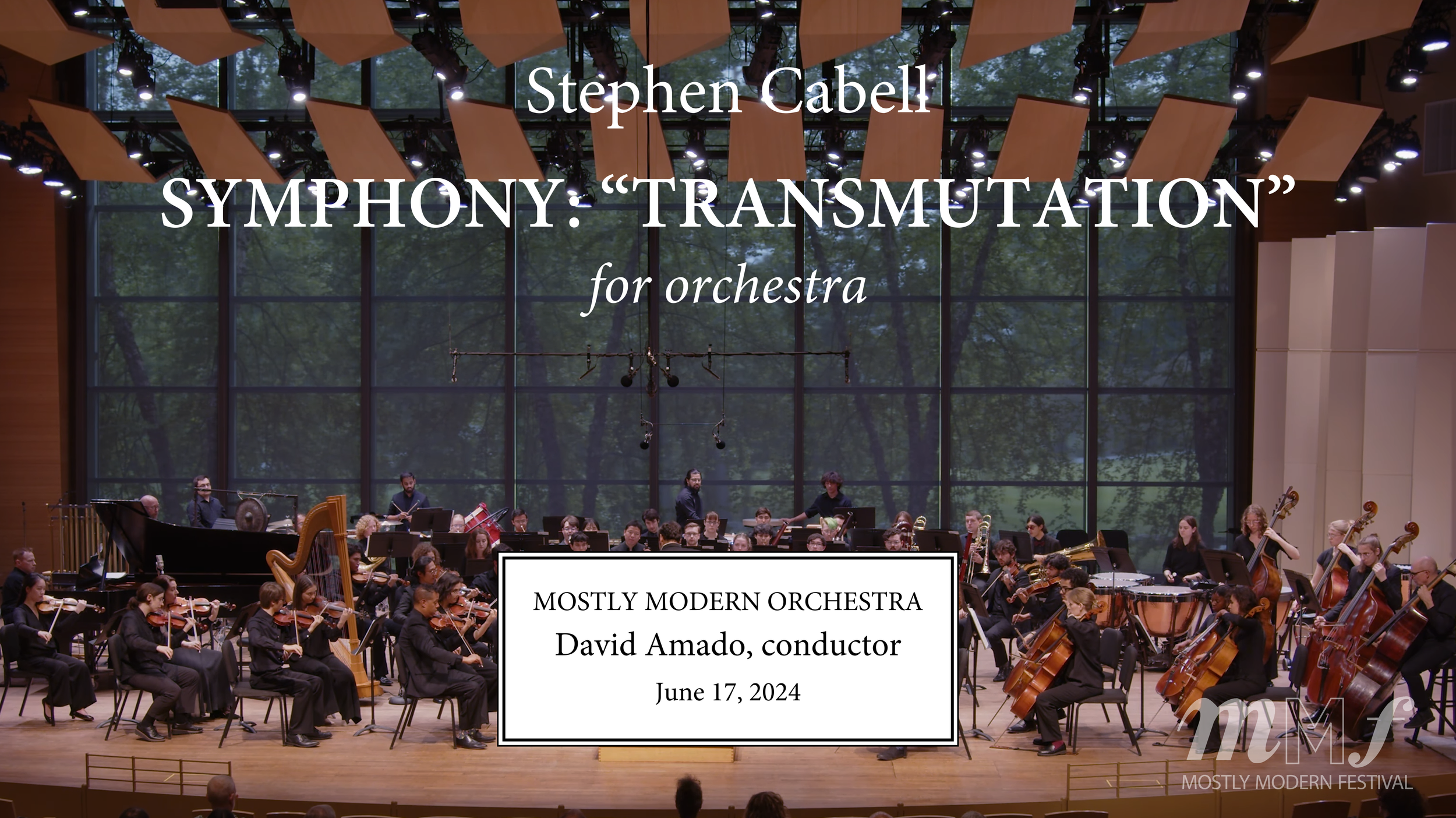
Mostly Modern Orchestra, conducted by David Amado – Mostly Modern Festival – June, 2025
Program Note
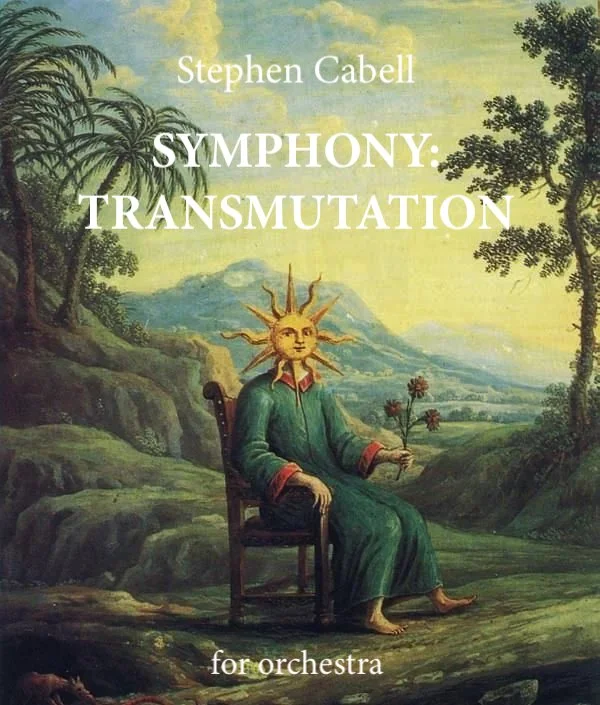
The Great Work of medieval alchemy—its magnum opus—sought to transform one substance into another, most famously lead into gold. Some alchemists understood this process as a progression through four color-coded stages: blackening (nigredo), whitening (albedo), yellowing (citrinitas), and reddening (rubedo).
At the end of this process supposedly waited the Philosopher’s Stone, “a stone that is not a stone,” with the power to produce gold, heal disease, and reveal hidden forms of knowledge. Whether or not any of this was true, the desire to transform something common, damaged, or unfinished into something radiant remains compelling—particularly to a composer confronting a page of unpromising musical fragments.
I am drawn to alchemical texts not as practical manuals, but as records of an imagination in which chemistry, poetry, mysticism, and prayer occupied the same boiling vessel. Symphony: “Transmutation” follows the color stages described in those texts, treating them less as a scientific procedure than as a map of psychological and spiritual change. Its three movements are performed without pause.
I. Nigredo (Blackening)
Alchemical transformation begins with destruction. Existing material is burned, broken apart, and reduced to a dark, undifferentiated mass. The symphony opens inside this charcoal atmosphere. Isolated instrumental voices reach toward incomplete melodies, rising and dispersing like smoke searching for an opening.
II. Albedo (Whitening)
The second stage is a purification or washing away of impurities. The music becomes more active as its pulse and direction come into focus. Sudden fragments of bright, sharply defined harmony cut through the orchestral texture like light reflected from wet metal.
III. Citrinitas to Rubedo (Yellowing to Reddening)
Citrinitas signals the first appearance of light, while rubedo represents the completion of the Great Work: spirit and matter reconciled, and gold revealed within the crucible. In the final movement, the music gradually stops struggling against its own weight and begins to glow from within.
Together, the movements trace a path from breakdown toward breakthrough. No gold emerges at the end, but the work holds to the old alchemical hope that raw and resistant material—whether lead, grief, or musical sound—might still be transformed into something vivid. Unlike the medieval alchemists, however, we can attempt the experiment without setting the monastery on fire.
—SC